Home
Instituto
Institute
Restaurantes
Restaurants
Novidades
News
Territórios
Territories
Educação
Education
Produtos
Products
Conecte-se
Contact
EN
Navegue por categoria
Browse by category
Cardápios
Menus
Estabelecimentos
Establishments
Bairros
Neighborhoods
Municípios
Municipalities
Influências
Influences
Identidade carioca (em construção)
Carioca identity (under construction)
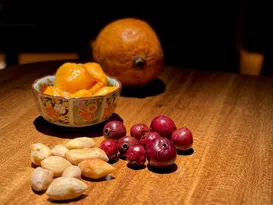
A castanha de sapucaia, árvore nativa da Mata Atlântica, está na época. Tem um perfume aberto, quase floral e cítrico. Na boca, vem com notas terrosas, meio banana, meio maçã.
The sapucaia nut, from a tree native to the Atlantic Forest, is in season. It has a bright, almost floral and citrusy aroma. On the palate, it brings earthy notes, somewhere between banana and apple.
continuar lendo
read more
No restaurante, em Copacabana, sobremesas com frutas da Mata Atlântica combinam ingredientes brasileiros e asiáticos.
At the restaurant in Copacabana, desserts with fruits from the Atlantic Forest combine Brazilian and Asian ingredients.
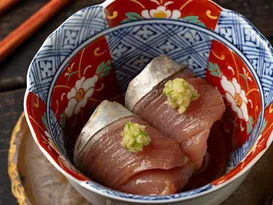
Omakase, em Copacabana, traz peixes brasileiros típicos do outono, como carapau e olho de boi.
Omakase, in Copacabana, offers typical Brazilian autumn fish, such as horse mackerel and amberjack.
Em 1939, o gerente do Banco Yokohama Shokin construiu uma casa de fim de semana naquele bairro, então deserto. Quando a família voltou ao Japão, permitiu ao cozinheiro que abrisse ali um restaurante, que se chamava Shujyu Na. Teve vida curta, o negócio, por conta do acesso difícil.
In 1939, the manager of the Yokohama Shokin Bank built a weekend house in that then-deserted neighborhood. When the family returned to Japan, they allowed the cook to open a restaurant there, called Shujyu Na. The business had a short life due to difficult access.
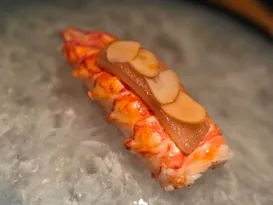
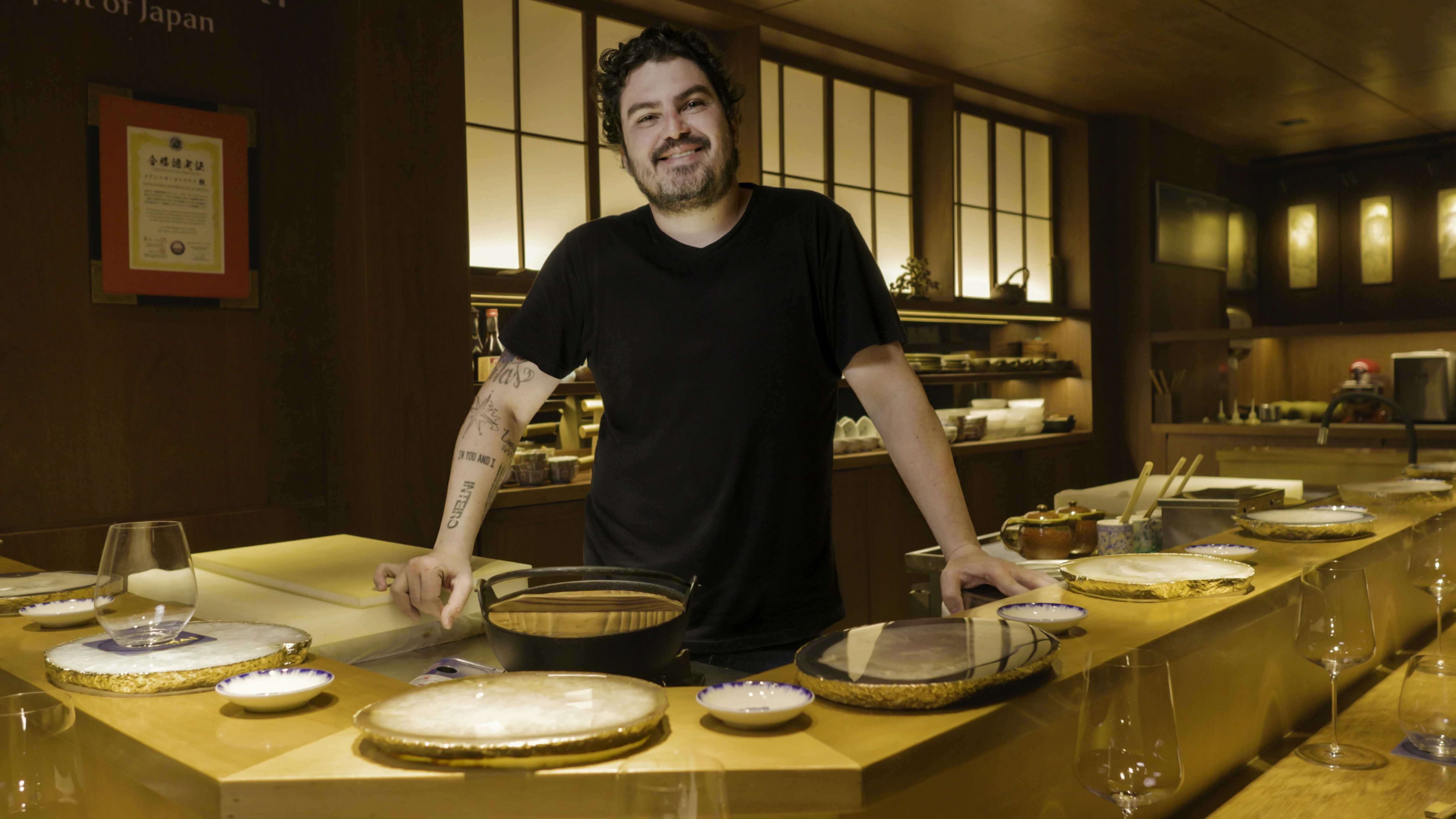
Copacabana, o bairro da praia mais famosa do Rio, é conhecido por ser um lugar de muito movimento. No meio deste caos urbano, está o Umai. Rio: uma sala reservada, escondida no segundo andar de um prédio discreto, onde os melhores ingredientes brasileiros encontram técnicas japonesas.
Copacabana, the neighborhood of Rio's most famous beach, is known for its bustling atmosphere. Amidst this urban chaos lies Umai. Rio: a secluded room, tucked away on the second floor of a discreet building, where the finest Brazilian ingredients meet Japanese techniques.
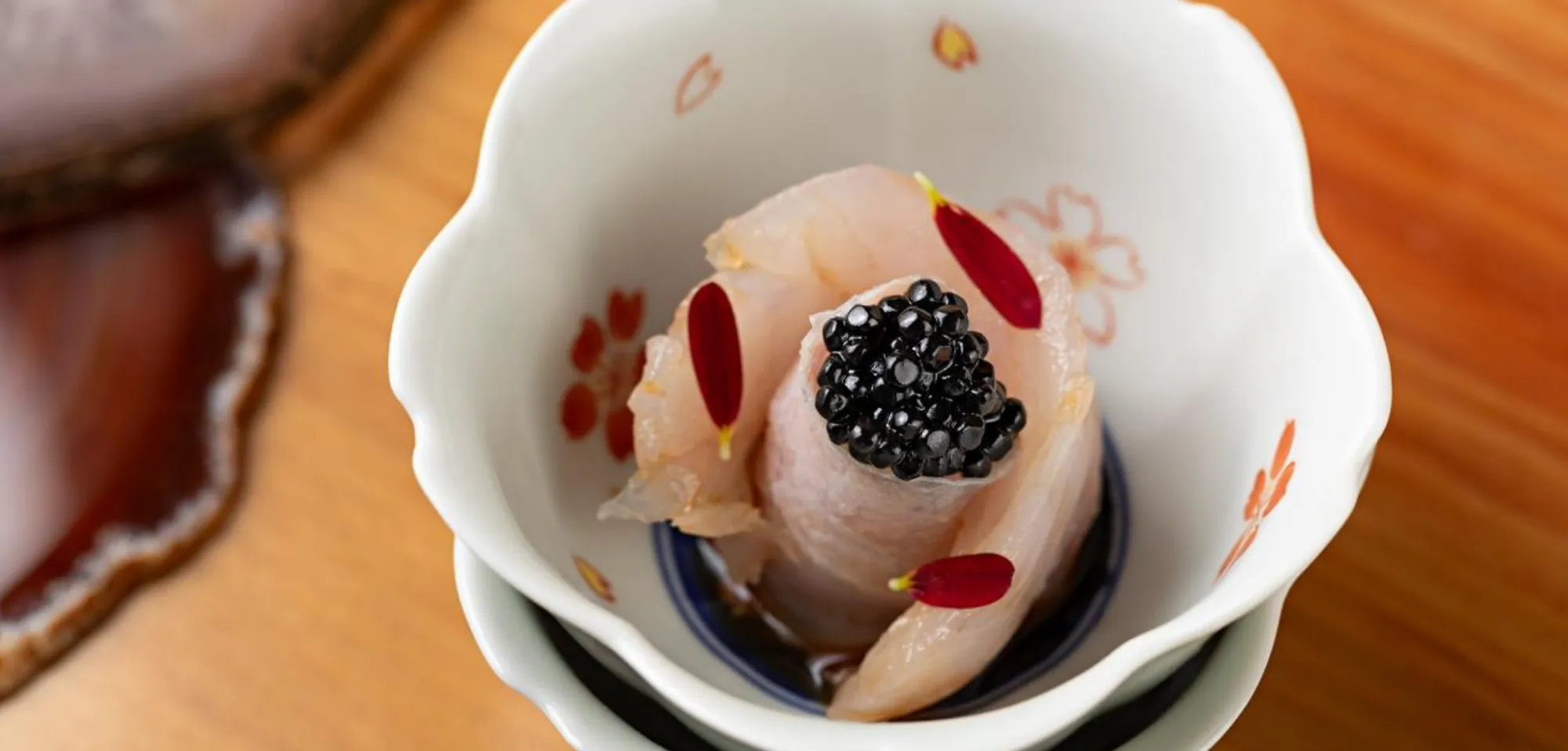
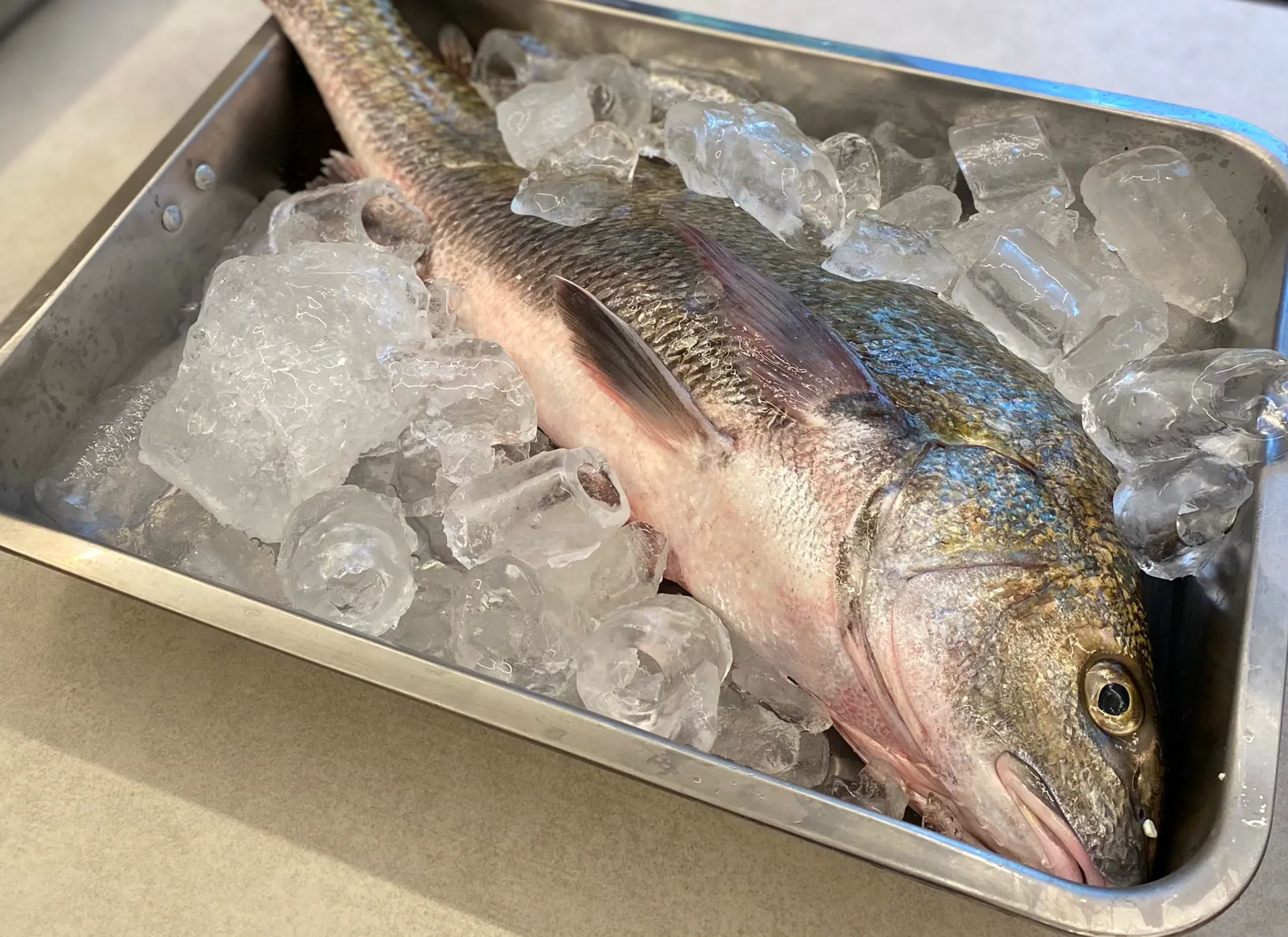
Também conhecida por piraúna ou “corvina da boca torta”, a perumbeba tem carne branca, firme e filé bem definido, com poucas espinhas. Por se alimentar de siris, caranguejos e camarões no fundo da lagoa, tem sabor e aroma intensos.
Also known as piraúna or "crooked-mouthed corvina," the perumbeba has white, firm flesh and a well-defined fillet with few bones. Because it feeds on crabs, shrimp, and blue crabs at the bottom of the lagoon, it has an intense flavor and aroma.