Home
Instituto
Institute
Restaurantes
Restaurants
Novidades
News
Territórios
Territories
Educação
Education
Produtos
Products
Conecte-se
Contact
EN
Navegue por categoria
Browse by category
Cardápios
Menus
Estabelecimentos
Establishments
Bairros
Neighborhoods
Municípios
Municipalities
Influências
Influences
Identidade carioca (em construção)
Carioca identity (under construction)
Às vésperas da chegada da família real, o censo de 1793 nos conta que São Sebastião do Rio de Janeiro tinha 17 casas de pasto (as precursoras dos restaurantes), 40 “casas de café” e 344 tabernas, mas todas confinadas ao centro da cidade para dar de comer e beber aos viajantes, profissionais liberais
In that valley, life was made of the ups and downs of ox carts bordering the river. The history of the street is inseparable from the Carioca River—the city's main source of fresh water until the end of the Empire—since the street's design was sculpted by the trails and paths that bordered its...
continuar lendo
read more
Em meados do século XIX, Nova Friburgo tornou-se importante exportadora de banha para a capital. Antes da geladeira, a banha era usada para conservar alimentos, de feijões e legumes a carnes. Em 1887, o Jornal do Commercio destaca os produtos da Fazenda Gavião, do Barão de Nova Friburgo, como “touci
In that same region, in Itaipava, the Faraona restaurant structured its concept around the cultivation of vegetables and legumes, the raising of goats and piglets, and the use of guinea fowl—or "faraonas," as they are called in Italian—a bird traditionally raised in the mountains. The concise menu i
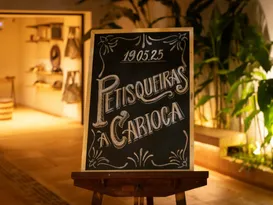
Você já ouviu falar nas “petisqueiras”? Pode-se até pensar em petiscos, mas petisqueira eram sinônimo de “iguarias”, “coisas deliciosas”. Foram o primeiro “ensaio” de uma gastronomia genuinamente carioca. O primeiro registro que encontramos foi “A Petisqueira do Catete”, que surgiu em 1850, no...
Have you ever heard of “petisqueiras”? You might think of them as snacks, but petisqueiras were synonymous with “delicacies”, “delicious things”. They were the first “test” of a genuinely Carioca cuisine. The first record we found was “A Petisqueira do Catete”, which opened in 1850, in the...
A vinda da Côrte Portuguesa para o Brasil trouxe um hábito, no prato: o de comer aves de caça. No Rio de Janeiro, entre o fim do século XIX e o início do XX, macucos, inhambús, e também perus, desfilavam nos cardápios mais nobres, sobretudo em Laranjeiras, então reduto elegante de veraneio.
The arrival of the Portuguese Court in Brazil brought a custom to the table: eating game birds. In Rio de Janeiro, between the late 19th and early 20th centuries, tinamous, small-billed tinamous, and also turkeys, were on the finest menus, especially in Laranjeiras, then an elegant summer retreat.
A presença britânica no Rio de Janeiro, especialmente entre os séculos XIX e XX, deixou marcas profundas não só na arquitetura, no comércio e nos clubes, mas também na maneira como a cidade aprendeu a comer e a beber. Hospedarias, cafés, hotéis e padarias comandados por ingleses ajudaram a espa...
The British presence in Rio de Janeiro, especially between the 19th and 20th centuries, left deep marks not only on architecture, commerce, and clubs, but also on how the city learned to eat and drink. Inns, cafes, hotels, and bakeries run by the English helped spread new habits, and the British...
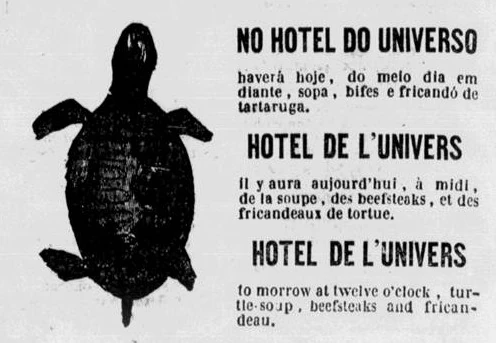
Da série PRATOS ESQUECIDOS. Comia-se tartaruga, no Rio. Era chique. Nas mesas da época do Império, vinham em bifes. Pastéis, fricassés e fricandós eram anunciados pelas casas de pasto; sopas de tartaruga abriam grandes banquetes.
From the series FORGOTTEN DISHES. Turtle was eaten in Rio. It was chic. On the tables during the Empire, it was served as steaks. Pastries, fricassés, and fricandós were advertised by the taverns; turtle soups opened grand banquets.